The way people find financial advisors is changing faster than most advisors realize.
A few years ago, the path was pretty predictable. Someone would ask a friend for a referral, or they'd type "financial advisor near me" into Google and scroll through the results. The advisor with the best website, the most reviews, or the highest ad budget usually won.
That's not how it works anymore. Not entirely.
Right now, millions of people are typing questions into ChatGPT, Perplexity, and Google's AI mode instead of scrolling through search results. They're asking things like "who should I talk to about my RSUs before I change jobs?" or "what should I look for in a financial advisor for retirement planning?" And the AI gives them an answer. Sometimes it names specific advisors. Sometimes it describes what to look for. Either way, the traditional search results page is becoming less relevant to how real people make real decisions.
Twenty-five percent of high-income prospects are already using AI to find their financial advisor, according to recent industry data. That number is only going up.
If you're a financial advisor and your name, your expertise, and your content aren't showing up when AI answers these questions, you're invisible to a growing segment of your ideal clients. Not because your work isn't good. Because AI doesn't know you exist.
This article explains how that's changing and what you can do about it.
How AI Search Actually Works (The Simple Version)
When someone asks ChatGPT or Google AI a question, the AI doesn't search the internet in real time the way Google's traditional search does. Instead, it pulls from a combination of its training data (everything it learned from the internet up to a certain point) and, in some cases, live web searches that it runs in the background.
The important part for advisors is understanding what makes AI confident enough to mention you or your content in a response.
AI models look for a few things. They look for content that directly answers the question being asked. They look for consistency, meaning your name and expertise show up in multiple places saying similar things. They look for specificity, meaning you're clearly associated with a particular topic or niche rather than being a generalist who writes about everything. And they look for content that's structured in a way they can easily parse, with clear headlines, direct answers, and organized information.
This is different from traditional SEO. With traditional search, you were trying to rank a page. With AI search, you're trying to become a source that AI trusts enough to reference. The distinction matters because the tactics are different.
Why Most Advisors Are Invisible to AI
If you've been posting on LinkedIn consistently, you might assume AI can find you. But LinkedIn posts disappear from feeds within 48 hours. They're not easily crawlable by most AI models. And even if an AI model has seen your LinkedIn content during training, it has no way to connect your individual posts into a coherent picture of your expertise unless you've been very consistent about your topics.
If your firm has a website with a generic bio page that says "we help clients achieve their financial goals through personalized planning," that's not going to surface in an AI response either. There's nothing specific enough for an AI to latch onto. Every advisor's bio says something similar.
The advisors who are starting to show up in AI responses have a few things in common. They've published specific, searchable content on their own website about the topics their niche cares about. They've been consistent about those topics across multiple platforms. And they've structured their content in a way that makes it easy for AI to extract and reference.
None of this requires a massive marketing budget or a team of SEO consultants. It requires being intentional about what you publish and where.
The Five Things That Make AI Notice You
Here's what I've learned from studying how AI models surface information and from building my own content strategy around these principles.
1. Own a website you control.
Your Substack, your LinkedIn, and your firm's compliance-approved bio page are all useful. But none of them are fully in your control when it comes to how search engines and AI models access and index your content. A simple website with a blog section gives you a place to publish content that Google can crawl, AI models can reference, and you can update anytime.
This doesn't need to be complicated. A few well-written articles on the topics you know best, published on a domain you own, with clear headlines and direct answers to the questions your ideal clients are asking. That's the foundation.
2. Answer the exact questions your prospects are asking.
Think about what your ideal client would type into ChatGPT before they ever talk to an advisor. Not "financial planning tips" but "should I exercise my stock options before my company goes public?" or "is a Roth conversion worth it if I'm in the 35% tax bracket?" or "how do I find a financial advisor who specializes in physician finances?"
Those specific questions are what AI is trying to answer. If you've written an article with that question as the title and a clear, direct answer in the first paragraph, you've given AI exactly what it needs to reference you.
The more specific the question, the less competition you have. There are thousands of articles about "retirement planning." There are very few clear, well-written articles about "how teachers in Colorado should think about PERA vs. Social Security." If that's your niche, that specificity is your advantage.
3. Be consistent across platforms.
AI builds confidence through repetition. If your website says you specialize in equity compensation for tech employees, and your LinkedIn posts are consistently about that topic, and your Substack covers it regularly, AI starts to see a pattern. You become associated with that topic in the model's understanding.
If you post about equity comp on Monday, retirement planning on Wednesday, and estate planning on Friday, AI has a harder time figuring out what you're actually known for. You might be covering all three topics well, but from AI's perspective, you're a generalist.
This doesn't mean you can never write about other topics. It means your core 3 to 5 authority topics should show up consistently everywhere you publish. The other stuff can happen around it.
4. Structure your content so AI can use it.
This is the part most advisors skip. You can write a great article, but if it's structured as a long narrative with no clear sections, AI has a harder time extracting the answer to a specific question.
The structure that works best for AI discoverability is simple. Put the question in the title. Answer it directly in the first paragraph (no long preamble, no story, just the answer). Then expand on the answer with clear subheadings that break the topic into logical sections. Close with a natural mention of who you help and how.
This is different from how you'd write a LinkedIn post or a newsletter. Those benefit from storytelling and a slow build. An AI-discoverable article benefits from directness. Both formats are valuable. They just serve different purposes.
5. Build references across multiple sources.
AI models gain confidence when they see your name associated with a topic across independent sources. Your own website is one source. A podcast appearance where you discussed the same topic is another. A guest article on an industry publication is another. A detailed LinkedIn profile that clearly states your specialty is another.
Each one of these independently might not be enough. Together, they create a picture that AI can reference with confidence. "Sam Farrington writes about AI for financial advisors" becomes a reliable association when it shows up on his website, his LinkedIn, his Substack, and a few industry publications.
You don't need to be everywhere. You need to be consistent about your topics in the places where you do show up.
A Simple Framework for Getting Started
If this feels like a lot, here's the simplest version of what to do.
Pick your 3 authority topics. These should be the things you explain better than most advisors, the topics your ideal clients ask about before they even hire you. If you've been creating content for a while, you probably already know what these are based on what resonates.
Write one article per topic on your own website. Title each article as the question your ideal client would ask. Answer the question directly in the first paragraph. Expand with clear subheadings. Keep each article between 1,000 and 2,000 words.
Make sure Google knows your site exists. Submit your sitemap to Google Search Console and request indexing for each article. This takes about 15 minutes and is a one-time setup.
Keep posting about these same topics on LinkedIn. Every post reinforces the association between your name and your authority topics. When someone finds your LinkedIn and then finds the same topics covered in depth on your website, the consistency builds trust, both with prospects and with AI.
Link your content together. When you write a newsletter issue about one of your authority topics, link to the full article on your website. When you publish a LinkedIn post, mention the longer piece in the comments. Every connection between your content makes it easier for AI to map your expertise.
That's the system. It's not complicated, but it does require intention. Most advisors are creating content without thinking about whether AI can find it. The ones who think about it now are building an advantage that compounds over time.
Watt, the Amplify for Advisors Agent
See Watt solve this.
Paste your website once, and Watt drafts a week of posts with graphics in your voice and brand, ready for you to approve.
This week · ready for your review



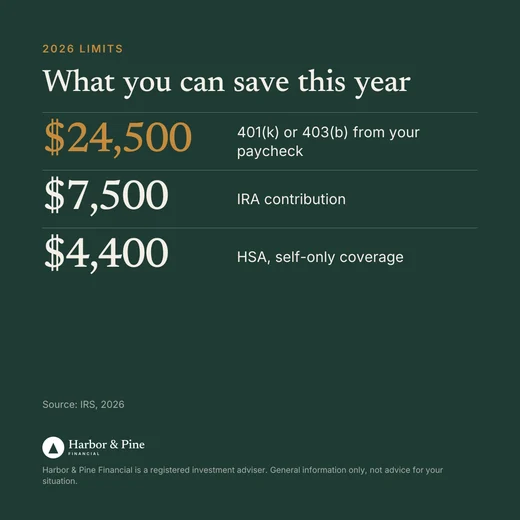

Open now. Watt drafts a week of posts, emails and graphics in your voice, with no client data needed.
Start your 7-day free trialThis Isn't About Gaming AI. It's About Being Findable.
I want to be clear about something. This isn't about tricking AI into recommending you. It's about making sure that the expertise you already have is visible to the systems that prospects are increasingly using to make decisions.
If you're great at what you do but your online presence is a generic bio page and some occasional LinkedIn posts about random topics, AI has nothing to work with. You're invisible not because you lack expertise but because that expertise isn't published anywhere AI can reference it.
The advisors who are going to thrive in this environment are the ones who take what they already know and make it findable. Specific topics, clear answers, consistent presence, structured content. That's it.
You don't need to become an SEO expert. You don't need to hire a marketing agency. You need to write about what you know, put it somewhere searchable, and keep doing it consistently.
The tools are changing fast. The way prospects find advisors is evolving. But the fundamental principle hasn't changed at all: the advisor who shows up with clear, helpful, specific information at the moment a prospect is looking for it is the one who gets the call.
The only difference now is that "showing up" means showing up in AI, not just on the first page of Google.

Sam is the creator of Amplify for Advisors and Watt, the Amplify for Advisors Agent. A former RIA owner whose work has been featured in Forbes, NerdWallet, Nasdaq, and more, he teaches financial advisors to use AI in their own voice while staying compliant.