Picture a firm announcing it hired 700 people this week. You'd expect a parking problem, an onboarding queue out the door, and one very tired person in HR.
A $630 billion RIA announced roughly that this week, and not one of the new hires needs a desk. Everywhere else, the money and attention went to the unglamorous machinery underneath a practice, the onboarding and the paperwork and the recordkeeping, which turns out to be more interesting for you than it sounds.
Three stories from this week that matter for your practice.
A $630 Billion RIA Just Added the Equivalent of 700 Employees Without Buying a Single Desk.
On Tuesday, Mariner, the Overland Park firm advising more than $630 billion in client assets, announced a five-year partnership with Humanity Labs to build what they're calling an AI Workforce of more than 700 full-time equivalents. The company bills it as the first adoption of the AI workforce model at enterprise scale in wealth management. The distinction they're drawing matters more than the headline number. Instead of handing individual employees another tool to speed up individual tasks, the AI Workforce runs as an embedded team inside the systems Mariner already uses, taking on client onboarding, account opening, compliance reviews, client reporting, billing, and prospect onboarding. Every action it completes gets captured in a shared memory layer, so the firm's own operational knowledge builds up and the work improves over time. Humanity Labs founder Andrei Pop describes the whole thing as a managed service that sits on top of the tools a firm already has.
Why you should care: No small practice is deploying 700 of anything, and the thinking behind this is still worth borrowing. What Mariner changed is how the work gets organized, and that decision is available to a practice of one. The memory layer is the piece to steal. When you write down your voice guide, save the prompt that actually worked, and keep the instructions for a workflow you've already run once, you're building the same thing at your own scale. A firm with 700 AI equivalents and an advisor with a well-documented content system are after the same outcome, which is making sure the work you did last month makes next month easier. One version accumulates in an enterprise platform and the other accumulates in a folder on your desktop, and both of them compound.
Source: WealthManagement.com
The Paperwork That Makes Leaving a Firm Painful Is Getting Automated.
On Tuesday, Feathery announced $30 million in total funding, including a newly completed Series A led by Portage Ventures with Bain Capital Ventures and Index Ventures among the backers. The company builds AI that consolidates client data across the systems a firm already runs and then automates the operational work sitting on top of it, including client onboarding, account opening, proposal generation, and advisor transitions. It says it serves more than 300 firms and supports roughly a third of the top 30 firms on Barron's 2025 Top 100 RIAs list. InvestmentNews put the raise in the context that makes it worth your attention, which is advisor mobility. Cerulli estimated that 9% of advisors, representing $3.1 trillion in assets, were expected to change firms in 2025, and the stretch between the day an advisor signs with a new firm and the day client accounts actually go live has become a real competitive problem. A slow transition delays revenue for the advisor and the firm both.
Why you should care: If starting your own firm or moving to a better one has been in the back of your mind, the mechanical part of that move keeps getting easier, and serious money is now behind making it easier still. Paperwork, account opening, and data migration were the reasons a lot of people stayed put one more year. Those reasons are fading. What software doesn't touch is the part that actually determines whether a move works, and there are two pieces to it. The first is legal, and it deserves a clear-eyed look. Depending on what you signed, you may be working under a non-solicit, a non-compete, or garden leave language that limits who you can contact and when, and those provisions vary a lot by firm and by state. Read your agreement before you plan anything and talk to an attorney who handles transitions, because no amount of automation solves a contract. The second piece is the one you build over years instead of weeks. Clients follow people they trust and whose thinking they already know, and that gets built through consistent communication long before there's any move to announce. The advisors who transition well tend to be the ones whose clients could already describe what they stand for.
Source: InvestmentNews
Compliance Tools Are Catching Up to the Communications AI Helps You Write.
In Friday's wealthtech roundup, SmartRIA launched SmartArchive, an AI-powered archiving and surveillance capability built for registered investment advisors and independent broker/dealers. It captures, monitors, and reviews business communications across text messages, social media messages, emails, and websites from a single place. This is the third piece of the company's AI compliance suite to arrive this year, joining SmartReview and SmartAssist, and it runs on archiving technology licensed from a provider called Presults.
Why you should care: One thing gets overlooked when AI speeds up how much you produce. Every client text, social post, and email you write with AI help is still a business communication, and your recordkeeping obligations don't soften because a machine drafted the first version. Producing more communication faster also means producing more records faster. That's a good problem to have, and it's a better one to get ahead of than to meet for the first time during an exam. You may not need this particular product. The useful move this week is knowing which channels your AI-assisted communications actually go out on and whether what you're already paying for captures all of them.
Source: WealthManagement.com
Watt, the Amplify for Advisors Agent
See Watt solve this.
Paste your website once, and Watt drafts a week of posts with graphics in your voice and brand, ready for you to approve.
This week · ready for your review


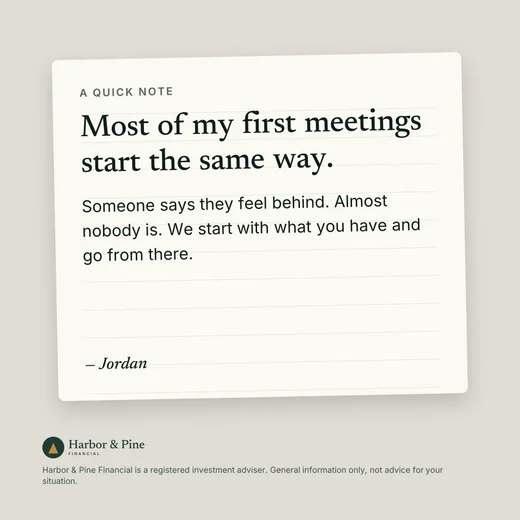
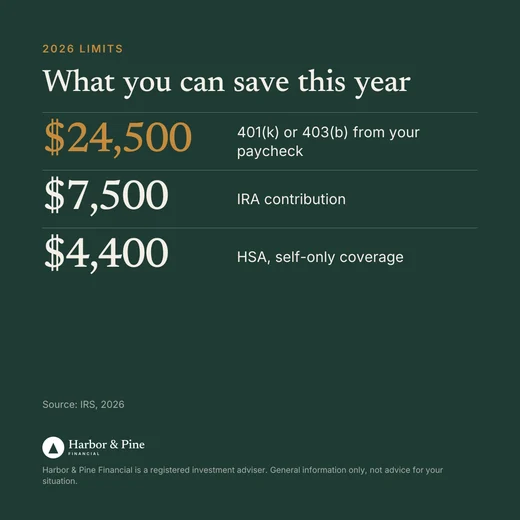

Open now. Watt drafts a week of posts, emails and graphics in your voice, with no client data needed.
Start your 7-day free trialOne Thing to Try This Week
Mariner's version of this took a five-year contract. Yours takes an afternoon. The idea worth copying is the memory layer, which is really just writing down the work you already do so next time starts from something instead of a blank page. Here's how to build your first one.
Step 1. Think about your week and the work that repeats. You don't have to pick the right one, because the prompt below will help you choose.
Step 2. Open Claude or Cowork and paste this. The list is already built, so you're choosing rather than brainstorming from scratch.
I'm a financial advisor at a small firm and I want to turn one piece of my recurring work into a documented, repeatable system instead of rebuilding it from scratch each time.
MY PRACTICE: [solo or small team, roughly how many clients, who you serve]
Below is a list of recurring work in a typical small advisory practice. Do three things:
1. Sort the list into work that could run as a documented repeatable process with AI help, work where AI can prepare a draft but I need to finish it, and work that should stay entirely mine.
2. Pick the single best candidate for me to systematize first and explain why that one gives a small firm the fastest return.
3. For that one task, write me the reusable instruction file. Include the context you'd need from me each time, the step-by-step process, the quality checks, and the exact prompt I should paste next time so I never rebuild this from memory.
The list:
- Preparing for a client review meeting
- Writing the meeting follow-up and recap
- The quarterly client letter
- The recurring client email or newsletter
- Market commentary when something happens
- Social posts and blog content
- Responding to a first prospect inquiry
- Onboarding communication for a new client
- Answering the planning question you get asked constantly
- Birthday, anniversary, and life-event outreach
- Preparing talking points for a difficult conversation
- Deadline and document-request reminders
- Turning a long article or webinar into something you can send clients
- Re-engaging a client you haven't heard from in a while
If some items don't apply to my practice, just note that and move on.
COMPLIANCE GUARDRAILS
- Frame everything as education, not specific investment advice.
- Do not include any client names or identifying details in the process you build.
- Do not guarantee outcomes or performance.
- Build in a step where I review and approve before anything reaches a client.
Step 3. Save what it gives you somewhere you'll actually find it again. That file is your memory layer, and it's worth more the third time you use it than the first.

Sam is the creator of Amplify for Advisors and Watt, the Amplify for Advisors Agent. A former RIA owner whose work has been featured in Forbes, NerdWallet, Nasdaq, and more, he teaches financial advisors to use AI in their own voice while staying compliant.