The smoke has mostly cleared and your ears have mostly stopped ringing. Another Fourth of July is in the books.
The professional-grade shells, the ones that actually make you say whoa, are a different animal from the sparklers you hand the kids. More power, more rules, and nobody lights those in the driveway without reading the box first.
Anthropic put its professional-grade model back on the shelf this week, and it carries that same energy. Powerful enough to be worth reaching for, situational enough that you want to know what you're doing before you light it.
Three stories from this week that matter for your practice, all about that one model coming back and what to actually do with it.
Anthropic's Most Powerful Model Came Back This Week After an 18-Day Timeout.
On Tuesday, July 1, Anthropic restored access to Claude Fable 5, its most capable public model, across Claude.ai, Claude Code, and Claude Cowork. The model had been dark since June 12, when a government export-control order forced Anthropic to pull it. With the order lifted, Fable is back, and through July 7 it's included in Pro, Max, and Team plans at up to half your normal weekly usage before it shifts to paid credits. What matters most is knowing what it's actually for. Fable isn't built for quick chat, and it's slower and pricier per token than the everyday models. Where it earns its keep is big, tangled, multi-step work, the kind of days-long project that used to stall out halfway. It reads charts, tables, and dense PDFs, and it can plan across stages and check its own work with light supervision.
Why you should care: This is a tool for the big builds, not the daily grind. Don't reach for Fable to draft a two-line client email. Reach for it when you've got a genuinely large project, like building a full content system from scratch, working through a year of your own public writing to find patterns, or mapping out a niche authority plan end to end. The free window through July 7 is the low-cost moment to hand it exactly that kind of project and see what it does. Think of it as borrowing the industrial tool for the weekend. You wouldn't use it to hang a picture, but for the big job in the garage, it's the right call.
Source: Anthropic
Before You Point It at Anything, There's Fine Print on Your Data.
Fable comes with a data rule the everyday models don't. Every prompt and response runs through a mandatory 30-day retention window, and Fable can't operate under a zero-data-retention agreement the way Opus, Sonnet, and Haiku can. During those 30 days Anthropic runs automated safety checks over the traffic, and a human only sees content that gets flagged for serious harm. Anthropic has also said retained data isn't used to train its models. If you're a solo advisor on a Pro plan, this piece isn't actually new, because consumer plans already retained data for 30 days on every model. What changed is aimed at bigger firms, where a shop that negotiated zero retention now has to switch retention back on to touch Fable at all.
Why you should care: For an RIA, this reinforces a rule you should already be running your practice by. Client nonpublic information does not belong in a consumer AI tool, and Fable's retention is a clean reminder of why. Under the Reg S-P update, whose compliance deadline for smaller firms arrived June 3, you're expected to document what every AI vendor does with your data, where it's stored, and how long they keep it. Fable's answer to that last question is 30 days with possible human review of flagged content, which is fine for public-facing work and a poor fit for anything client-identifying. So use it for the public stuff, keep client data out, and if your firm runs an enterprise zero-retention setup, know that Fable sits outside it and check with compliance before routing anything sensitive through it.
Source: Anthropic Help Center
One Government Letter Took the Model Offline for 18 Days. Keep That in Mind.
Step back from Fable itself and look at what the past few weeks showed. Anthropic launched the model on June 9. Three days later a government export-control directive forced it offline, and it stayed down for 18 days until the order was lifted and access returned July 1. The other Claude models kept running the whole time, so teams that needed a backup shifted to Opus 4.8 and kept working. Still, the episode made something plain. A frontier AI model can now be pulled from the shelf on short notice, for reasons that have nothing to do with you or the work you're doing with it.
Why you should care: The takeaway for a small firm isn't to avoid these tools. It's to hold them a little loosely. If your whole workflow lives inside one model and that model disappears for 18 days, you're stuck waiting. If your voice guide, your prompts, and your process are written down and portable, you point them at the next-best tool and keep moving. That's the real advantage of building your own systems instead of renting someone else's finished product. The system is yours, and it travels with you. Own the process, stay flexible on the tool, and no single company's bad week has to become your bad week.
Source: NBC News
Watt, the Amplify for Advisors Agent
See Watt solve this.
Paste your website once, and Watt drafts a week of posts with graphics in your voice and brand, ready for you to approve.
This week · ready for your review
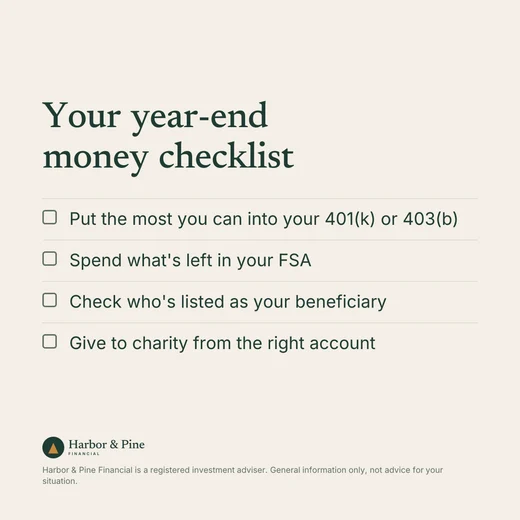

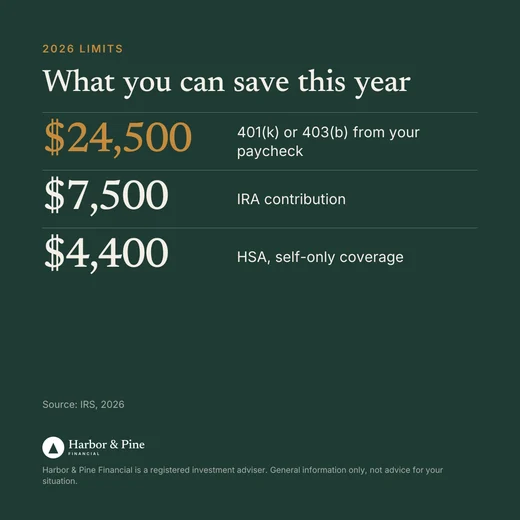

Open now. Watt drafts a week of posts, emails and graphics in your voice, with no client data needed.
Start your 7-day free trialOne Thing to Try This Week
Fable is included through July 7, so this is the low-cost window to test it on a real project. Here's one worth running. Have Fable audit how visible you actually are to AI, using nothing but your public URLs. It runs on public pages, so the retention question never comes near a client, and it shows you something you can't see on your own, which is what a machine finds when it goes looking for an advisor like you.
Step 1. Turn on web search in your Claude settings first, so Fable can actually fetch and read your pages. Then gather your public URLs, your website, your bio page, any articles or blog posts, and your Substack or newsletter link.
Step 2. Open Fable in Claude and paste this.
I'm a financial advisor and I want you to run an AI-visibility and positioning audit based on my public web presence. I'll give you URLs. Fetch and read the ones you can access. For any URL you cannot open or read, tell me plainly rather than guessing at the content.
WHO I AM
- My niche and ideal client: [who you serve]
- The topics I want to be known for: [3 to 5 areas]
MY PUBLIC URLS
- Website or homepage: [url]
- About or bio page: [url]
- Any article or blog URLs: [urls]
- Substack or newsletter URL: [url]
WORK THROUGH THESE PHASES
1. Fetch what you can. List which URLs you were able to read and which you could not, so I know what this audit is based on.
2. From the pages you could read, tell me in plain terms what my content currently signals about who I serve and what I specialize in. Where is that clear, and where is it vague or generic?
3. Imagine a prospect in my niche asking an AI assistant to recommend an advisor like me. Based only on what you could actually read, would there be enough for that assistant to describe me clearly and put me forward? Name the specific gaps.
4. Assess my crawlability. Which of my assets are the kind an AI tool can actually read, and which of my platforms are likely blocked to bots and doing little for my AI visibility? Tell me where I am over-invested in places machines cannot see.
5. Give me a prioritized plan. Rewrite my core positioning into a sharper bio and headline, and tell me what crawlable, article-style content to publish so I become the answer an AI assistant offers for my niche.
COMPLIANCE GUARDRAILS
- Work only from my public pages. Do not ask for or include any client names or private client details.
- Frame everything as education, not specific investment advice.
- Do not guarantee any particular ranking, traffic, or results.
Step 3. Read the output like a first draft from a sharp new hire. Pay special attention to phase 4, because that's where it tells you the uncomfortable truth. The platform you post on most, likely LinkedIn, is largely invisible to the bots that feed AI answers, and your crawlable articles are what actually make you findable. That alone might reshape where you put your content energy.

Sam is the creator of Amplify for Advisors and Watt, the Amplify for Advisors Agent. A former RIA owner whose work has been featured in Forbes, NerdWallet, Nasdaq, and more, he teaches financial advisors to use AI in their own voice while staying compliant.