The 2026 World Cup arrived this week, and the best content has not been from the field. It's been from the visitors.
Freddy, a fan from Germany, is documenting his American road trip with stops at Waffle House and Buc-ee's, and has now received road trip recommendations from JJ Watt and a shoutout from the Secretary of Transportation.
Americans watching this in real time are noticing things we'd stopped noticing about our own country. Which is a useful framing for the rest of this email, because three things happened with AI this week that you might be taking for granted, too.
Three stories from this week that matter for your RIA.
The Government Just Yanked Anthropic's Two Best AI Models. Yes, About 72 Hours After Releasing Them. Welcome to AI Regulation in Real Time.
On Tuesday, Anthropic released Claude Fable 5 and Claude Mythos 5, the most powerful AI models the company had ever made publicly available. Fable 5 was immediately the most capable AI model on the planet, according to benchmarks from Vals AI. Three days later, at 5:21 p.m. ET on Friday, the U.S. Commerce Department sent Anthropic an export-control directive citing national security, demanding the company block access for "any foreign national, whether inside or outside the United States, including foreign national Anthropic employees." Anthropic, having no real way to screen foreign nationals out of its user base in real time, switched both models off for everyone. Anthropic's blog post made clear they disagreed with the order, calling the underlying concern (a narrow jailbreak) the wrong basis for pulling a public model. Claude Opus 4.8 and other models remain unaffected.
Why you should care: This is the first time in the modern AI era that the U.S. government has reached into a frontier AI company's product and turned the lights off. For RIAs, two takeaways worth marking down. First, the tools you build into your workflow can vanish on a Friday afternoon if a regulator decides to act, which is exactly why your AI workflows should sit on models in the publicly available release tier (Opus, Sonnet, Haiku) rather than the cutting-edge frontier tier. Second, this is going to make every compliance officer in the industry slightly more alert. Your firm's AI acceptable use policy just got more relevant, not less.
Rockefeller Capital Management Just Picked Anthropic to Build Its AI Platform. Yes, That Rockefeller.
On Wednesday, Rockefeller Capital Management announced a partnership with Anthropic to build an AI-enabled wealth management platform powered by Claude. Rockefeller has $212 billion in client assets across its Global Family Office, Global Investment Management, and Global Investment Banking businesses, and the firm traces its history back to John D. Rockefeller's actual family office, founded in 1882. The initial phase of the buildout focuses on client meeting intelligence, operational workflows, and internal support. Rockefeller CEO Gregory Fleming framed it cleanly. "Our objective is not to replace that foundation, but to strengthen it." The same week Anthropic got told to disable two of its models, the storied family office of American capitalism picked them as its AI partner. Read that sequence twice.
Why you should care: When a 144-year-old family office serving ultra-high-net-worth clients picks an AI partner, the entire industry follows. The Rockefeller name carries weight with the exact prospects many advisors are trying to reach, namely people with serious money who care about discretion, trust, and judgment. By picking Claude, Rockefeller just made it permissible for every other wealth manager to do the same. If you've been hesitant about putting AI in front of your high-net-worth book, the social proof argument got dramatically easier this week. The deal also tells you which use cases the institutional smart money is focused on, and it's not portfolio selection or autonomous trading. It's meeting intelligence, operational workflows, and internal support. One of the most prestigious firms in the country is using AI to make their advisors better at the human parts of the job.
A $25B RIA CEO Just Laid Out the Three Phases of AI for Advisors. Worth Reading Before Your Next Strategy Meeting.
At Wealth Management EDGE in Boca Raton on Thursday, Summit Financial CEO Stan Gregor outlined what he sees as the three phases every advisory firm will move through with AI. Phase one is internal efficiency, basically using AI to save advisors and operations teams time on repeat tasks. Phase two is advisor enablement, putting AI tools (Summit's stack includes Jump, AIidentified, and Wealth.com) into the hands of advisors to deepen the work they do with clients. Phase three is client-facing, where AI starts to interact with the end client directly. Summit is firmly in phase two and explicitly skeptical about racing to phase three for relationship reasons. The framework is clean enough that you can place your own firm on it in about 30 seconds, which is the whole point.
Why you should care: Most RIAs trying to "do AI" are skipping straight to phase three, building chatbots or client portals they think will impress prospects. Gregor's framework explains why that's backwards. The firms that win phase one and phase two first build a real efficiency edge and a real depth edge before they ever expose AI to a client. Where are you on the framework? If your answer is that you have no AI in your operations yet, phase one is your starting point. If you have a few tools in place but no advisor on your team uses them daily, you're stuck between one and two. Skipping ahead doesn't make you sophisticated, it likely makes you more fragile.
Watt, the Amplify for Advisors Agent
See Watt solve this.
Paste your website once, and Watt drafts a week of posts with graphics in your voice and brand, ready for you to approve.
This week · ready for your review


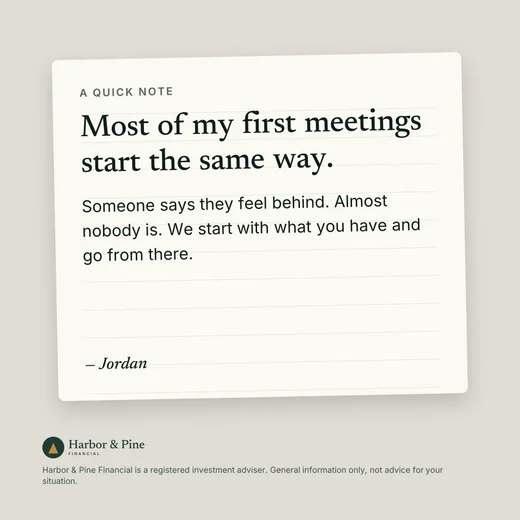
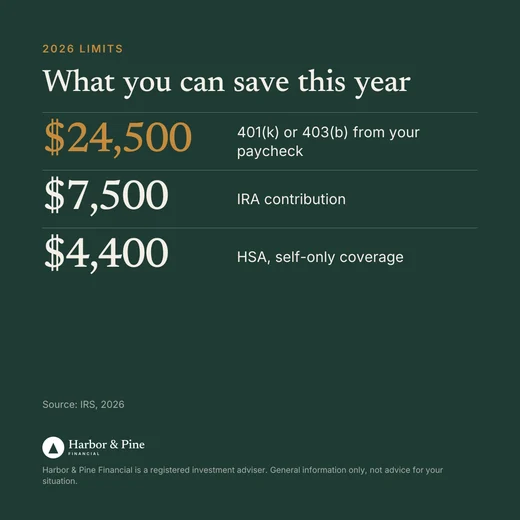

Open now. Watt drafts a week of posts, emails and graphics in your voice, with no client data needed.
Start your 7-day free trialONE THING TO TRY THIS WEEK
Place your practice on Summit Financial's three-phase framework in writing. The exercise takes 15 minutes and gives you a real picture of where to focus next.
Step 1. Pull up a blank doc and label three sections. Phase One (Internal Efficiency), Phase Two (Advisor Enablement), Phase Three (Client-Facing).
Step 2. Under each phase, list every AI tool, prompt library, or workflow you currently use that fits. If you experimented with a tool in March and haven't opened it since, it doesn't count. Real usage only.
Step 3. Open Claude or ChatGPT and paste this:
"I'm a financial advisor and here's my current AI footprint by phase. Phase one (internal efficiency): [list]. Phase two (advisor enablement): [list]. Phase three (client-facing): [list]. Based on what I have, identify the single phase where adding one more tool or workflow would have the most impact over the next 90 days. Frame it as a recommendation I should consider, not a directive."
A weaker answer tells you to add more to phase three. A stronger answer points you back to phase one or two and explains why depth beats reach. If you get the second kind of answer, that's the work for the rest of June.

Sam is the creator of Amplify for Advisors and Watt, the Amplify for Advisors Agent. A former RIA owner whose work has been featured in Forbes, NerdWallet, Nasdaq, and more, he teaches financial advisors to use AI in their own voice while staying compliant.