This was the week the AI conversation in wealth management stopped being theoretical.
A major Wall Street bank opened its $1.2 trillion wealth funnel to autonomous AI agents on Wednesday. The M&A panel at the industry's biggest conference of the year openly discussed how AI investment could split firms into haves and have-nots. And on another panel at the same event, wealth CEOs said AI is the thing that solves the projected 100,000-advisor shortage by 2034.
Three different conversations, all happening at once, all centered on the same question. What does AI actually mean for the practice you're running on Monday morning?
Three stories from this week that matter for your practice.
Morgan Stanley Just Opened Its $1.2 Trillion Wealth Platform to External AI Agents. Wall Street's First Domino Just Fell.
On Wednesday, CNBC reported exclusively that Morgan Stanley will let corporate clients' AI agents pull data directly from ShareWorks and Equity Edge, the bank's stock plan administration platforms. Morgan Stanley's chief product officer told CNBC the long-term vision is one where corporate administrators don't log into the platforms at all, AI agents do, through the Model Context Protocol (the same open standard Anthropic helped create). ShareWorks serves stock plans for nearly half the S&P 500 and eight of the ten largest unicorn startups, and Morgan Stanley uses it as the funnel to convert employees with equity comp into wealth management clients.
Why you should care: Read the funnel math. Tech employees vest their RSUs, exercise their options, and become wealth management prospects. That funnel just got handed to AI agents. If your practice serves tech employees, equity comp recipients, or business owners with stock plans, the prospect showing up on your discovery call has probably already had an AI agent review their options grant, model the tax implications, and suggest a diversification strategy before you ever met them. The conversation you're walking into isn't "help me understand my equity," it's "validate or improve on what the AI already told me." Different conversation, different prep, same client.
At INSITE 2026, M&A Experts Said AI Could Split the Industry Into Haves and Have-Nots. They Weren't Joking.
At BNY's INSITE conference in Aurora, Colorado on Thursday, DeVoe & Company founder David DeVoe told a packed M&A panel that firms' ability to spend millions on AI infrastructure threatens to "move us into a have and have-not space," WealthManagement.com reported. The panel was wall-to-wall industry heavyweights (DeVoe, Dynasty Investment Bank, Captrust, BNY Pershing) and the consensus was that M&A activity is accelerating, that nobody should sell for the sake of selling, but that the AI investment gap is real and widening. Translation: the big firms are spending real money on AI, the small firms can't, and the middle is about to feel uncomfortable.
Why you should care: The panel didn't say the next part out loud, so I will. Small firms don't need to outspend big firms on AI. They need to outsmart them on application. The big firms are building enterprise platforms that take 18 months to deploy and require armies of consultants. You can install a Skill in five minutes and have it working on your voice and your niche by tomorrow. Speed of execution is the small-firm edge, and it's an edge the big firms structurally can't take from you. The "haves and have-nots" framing only holds if you accept that capability is about spend. It isn't. It's about whether you actually use what's already available.
Wealth CEOs Say AI Solves the 100,000-Advisor Shortage. McKinsey, Meet Your Counterpoint.
Also at INSITE this week, a panel of wealth CEOs pushed back hard on McKinsey's projection that the industry faces a 100,000-advisor shortfall by 2034, WealthManagement.com reported Thursday. Hightower CEO Larry Restieri called the McKinsey numbers "a little overblown" and argued AI tools could help advisors "touch more clients and have more interactivity." Wealth Enhancement CEO Jeff Dekko went further. He said AI's encroachment could actually make clients "long" for human relationships, and that wealth managers are positioned to become "all things advice" for their clients. The room agreed. The shortage isn't a shortage if AI lets one advisor effectively serve twice as many clients.
Why you should care: This is the contrarian read worth a second of your attention. If McKinsey is right, the math is brutal. If the INSITE panel is right, it's an opportunity that looks completely different at the solo and small-firm level than it does at the enterprise level. The big firms scale by hiring. You scale by upgrading what one advisor can do in a week. For a solo or small practice, the question isn't "can I add advisors." The question is "can I serve 1.5x as many clients without losing the relationship quality that got me here." That's an AI question, and it's one you can start answering this month with the right tools and the right voice.
Watt, the Amplify for Advisors Agent
See Watt solve this.
Paste your website once, and Watt drafts a week of posts with graphics in your voice and brand, ready for you to approve.
This week · ready for your review


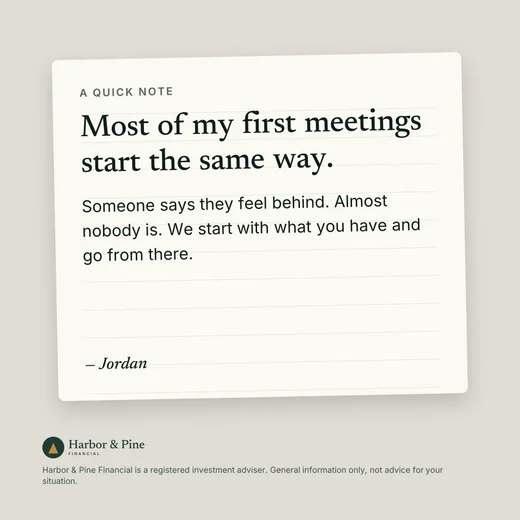
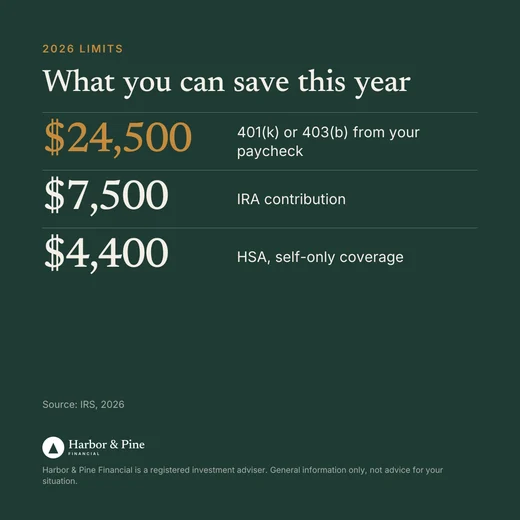

Open now. Watt drafts a week of posts, emails and graphics in your voice, with no client data needed.
Start your 7-day free trialONE THING TO TRY THIS WEEK
The shortage story has the most useful diagnostic question buried inside it. Can you serve 1.5x as many clients without losing the relationship quality that got you here? Many advisors haven't actually mapped where their time goes, so the answer is a guess. Let's make it real.
Step 1. Pick a normal week (this one, last one, whichever has the most clarity). Pull up your calendar and write down rough percentages of where your hours actually went. Use these five buckets: client meetings, meeting prep, follow-up and email, content and marketing, and administrative work.
Step 2. Open Claude or ChatGPT and paste this prompt.
"I'm a financial advisor and I want to identify which of my work activities AI could compress without hurting client experience. Here's how my week broke down: [paste your percentages]. For each category, suggest two specific AI-assisted compressions that would save me time, ranked by which has the lowest risk to client relationship quality. Frame as options for me to consider, not directives."
Step 3. Pick the single suggestion with the most upside and the lowest relationship risk. Pilot it for two weeks, then run the percentages again.
The advisors who scale without hiring are the ones who systematically compress the parts of the week that don't differentiate them, so they can spend more time on the parts that do. That's not theory. It's the actual mechanism the INSITE panel was describing.

Sam is the creator of Amplify for Advisors and Watt, the Amplify for Advisors Agent. A former RIA owner whose work has been featured in Forbes, NerdWallet, Nasdaq, and more, he teaches financial advisors to use AI in their own voice while staying compliant.