This week in AI for financial advisors: Fortune says a third of your clients are asking ChatGPT for financial advice before talking to you. On the bright side, at least someone is reading about retirement planning voluntarily.
Here's what matters for your practice this week.
THE BIG ONE
Your clients are rehearsing for your meetings with a chatbot. Here's what it's telling them.
Fortune published a feature this week citing McKinsey data: more than a third of consumers are now consulting ChatGPT and Claude before meeting with their financial advisor. Among younger investors, it's higher. Among investors who enjoy telling you about articles they read, it's probably approaching 100%.
This isn't theoretical anymore. I typed "I have $2 million saved and I'm 58, am I ready to retire?" into ChatGPT this week. In about 15 seconds it gave back a breakdown covering withdrawal rates, Social Security timing, healthcare gap analysis before Medicare, and a list of questions to ask a financial advisor at the next meeting. The advice wasn't bad. It was incomplete in the places that cost real money, but it sounded confident and organized. That's what your client is reading on Sunday night before your Monday meeting.
And the range of what you actually cover in a given week isn't even close to what AI can replicate. Andy Baxley, a CFP in Chicago, asked his AI notetaker (Hazel) to list every topic he covered with clients in a single week. The list had 27 items, from tax projections and equity comp planning to insurance reviews, real estate decisions, and family support conversations. That's one week. That's the job AI is supposedly coming for.
Most advisors are focused on the wrong part of this story. The threat isn't that AI gives better advice than you. It doesn't. The threat is that AI is communicating with your clients more frequently than you are. If a client's last touchpoint from you was a quarterly report PDF (that they probably skimmed for 30 seconds and then filed under "I'll look at this later," which we all know means never) and their last touchpoint from ChatGPT was a 10-minute conversation about their specific retirement question, which relationship feels more active?
The advisor who reaches out between meetings with something specific and useful will always beat the chatbot. But you have to actually reach out.
ALSO WORTH KNOWING
The U.S. Treasury just signaled that ignoring AI could become a regulatory risk.
The Treasury Department launched an AI Innovation Series this week with language that should get your attention. Treasury Secretary Bessent said they're "moving from a posture focused on constraint toward one that recognizes failure to adopt productivity-enhancing technology as its own risk." Translation for anyone who's been putting off the AI conversation: the compliance clock just started ticking.
If you run an independent practice, write one paragraph this week describing how your firm currently uses AI. Even if it's just "we use ChatGPT to draft email summaries and always review before sending." Save it. When a compliance questionnaire asks about your AI policy (and it will), you'll have a starting point instead of a Sunday night scramble.
Only 38% of affluent investors are comfortable with AI in their financial relationship, and that number hasn't moved in two years.
New Cerulli research puts the number even lower for clients over 70: just 16%. Your clients want better advice. They do not want to feel like they're getting it from a robot. The advisors who frame this well will deepen trust.
Try this sentence in your next client meeting: "I've been using AI to prepare more thoroughly for our conversations so we can spend our time on the decisions that actually matter to you." That's honest, specific, and positions AI as something that makes you better. Compare that to "we're implementing AI across our practice," which sounds like you just replaced the receptionist with Alexa.
THIS WEEK'S CHEAT SHEET
5 Questions Your Clients Are Asking AI (And the One-Sentence Answer That Beats the Chatbot)
Based on the Fortune and McKinsey data, these are the kinds of questions driving the conversations your clients are having with AI. For each one: what AI tells them, and a single sentence you can use in a meeting that immediately demonstrates why you're worth more than a chatbot.
1. "Do I have enough to retire?" AI gives them a confident number based on the 4% rule. It misses the lake house they want to buy in three years, the healthcare costs between now and Medicare, and the fact that their idea of "retirement" involves six months of international travel, not sitting at home watching market updates. But the number on screen looks very official.
Your sentence: "The short answer is yes, but the more useful answer depends on what you actually want the first three years to look like, and that's what we should map out together."
2. "Should I take Social Security at 62 or wait?" AI runs the breakeven math and usually says wait until 70 if they're healthy. Solid generic advice. It can't factor in that their spouse already filed early, that they have other income sources covering fixed expenses, or their family health history that makes planning to 95 feel like aggressive optimism.
Your sentence: "The breakeven math is only one piece of this. Let me show you how the timing interacts with [spouse's name]'s filing and what it means for survivor benefits if something happens to either of you."
3. "Is my financial advisor worth the fee?" AI compares your fee to a robo-advisor and lands on "it depends on complexity." Not exactly the endorsement you were hoping for. Meanwhile, you just saved them $10,000 on a tax strategy they didn't know existed.
Your sentence: You shouldn't need a sentence for this one. If clients are asking AI whether you're worth it, the real issue isn't your fee. It's that you haven't reminded them recently what you've done. A short email after your next planning win that says "wanted you to see the impact of the change we made" is worth more than any justification speech. People don't question the cost of things they can clearly see the value of.
4. "What questions should I ask my financial advisor?" AI generates surprisingly sharp lists: review beneficiary designations after a major life change, check concentrated stock exposure, ask about disability coverage gaps. Your clients might be walking in more prepared than they were six months ago. IMO, this might be the best thing AI has done for the advisor-client relationship so far.
Your sentence: "Before we get into the agenda, is there anything on your mind about your finances that you want to make sure we cover today?" Ask this first. If they came in with AI-generated questions, you just gave them permission to use them. Now you're collaborating instead of being quizzed.
5. "How do I find a financial advisor who specializes in [my situation]?" AI recommends filtering by specialty, checking fiduciary status, and reading reviews. It sometimes names specific firms. If you specialize in a niche and don't show up when a prospect types that niche and your city into ChatGPT, the fastest-growing referral source in the industry has no idea you exist. Which is a problem you can't solve inside a client meeting.
Your sentence: This one isn't about what you say to clients. It's about whether prospects can find you at all. See this week's test below.
THE 5-MINUTE TEST
Open ChatGPT (or Claude, or Perplexity) and type this:
"I'm looking for a financial advisor who specializes in [your niche] in [your city]."
Read what comes back. Does it mention you? Your firm? Anyone you'd consider a competitor?
If you're not there, twenty-five percent of high-income prospects are currently finding advisors through a channel that has no idea you exist. The good news: showing up in AI search isn't about ad spend (yet). It's about publishing specific, helpful content on topics you already know better than most people. I wrote a longer piece on exactly how this works at amplifyforadvisors.ai.
Watt, the Amplify for Advisors Agent
See Watt solve this.
Paste your website once, and Watt drafts a week of posts with graphics in your voice and brand, ready for you to approve.
This week · ready for your review
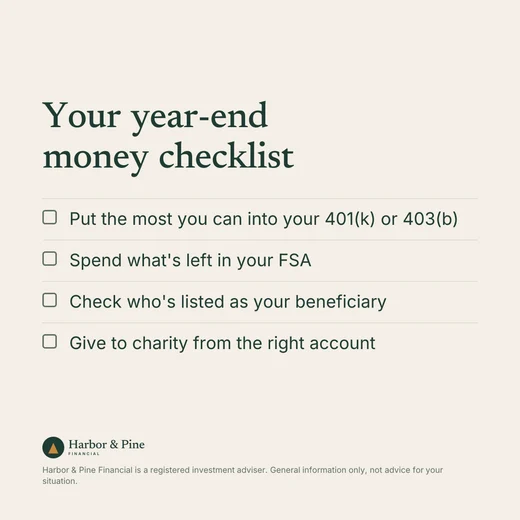

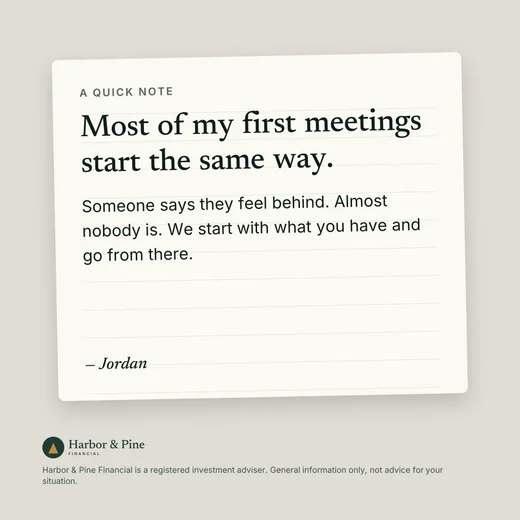
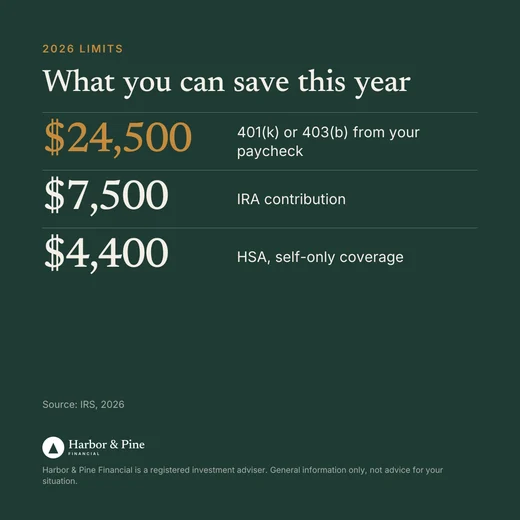

Open now. Watt drafts a week of posts, emails and graphics in your voice, with no client data needed.
Start your 7-day free trialSAM'S TAKE
The Fortune headline wants you to worry about AI replacing advisors. The data tells a better story.
Your clients aren't replacing you with a chatbot. They're preparing to talk to you using one. That changes how they show up, not whether they show up.
The advisors who adjust how they communicate between meetings are going to have sharper conversations and stronger client relationships than they had before AI entered the picture. The ones who keep waiting for quarterly reviews to do the talking are going to keep wondering why clients seem a step ahead of them.
Staying ahead of your clients has always been part of the job. The tools they're using to prepare just got a lot better. Yours should too.

Sam is the creator of Amplify for Advisors and Watt, the Amplify for Advisors Agent. A former RIA owner whose work has been featured in Forbes, NerdWallet, Nasdaq, and more, he teaches financial advisors to use AI in their own voice while staying compliant.