Almost every town has one. The restaurant that serves the best meal for miles, tucked down a side street with no sign, no website, and somehow not on a single map app. The food is incredible and the tables are half empty. Meanwhile the average chain by the highway has a 40 minute wait, because you can find it with your eyes closed.
Being good was never that place's problem. Being found was.
A lot of advisor websites are that hidden restaurant. Real expertise inside, and close to invisible to the tools people now use to go looking. This week the industry put real numbers to the problem.
Three stories from this week that matter for your practice.
Kitces Made the Case This Week That Your Website Has to Be Findable by AI.
In his July AdvisorTech column, Michael Kitces spotlighted something that's been building for a while. Advisor websites are going from a page that just sits there to one built to actually bring people in, both by Google and by the AI assistants people now ask for recommendations. The example he highlighted is a platform called WealthReach and its Living Sites, advisor websites engineered to keep improving their search visibility and to respond to how prospects search across Google, ChatGPT, Claude, and Gemini. The company says its audits of tens of thousands of advisor sites found the same problem again and again, that most were missing the basic technical foundations to rank at all, with broken headers, duplicate descriptions, and thin content. But Kitces adds the caveat that matters most. The tech only goes so far, because it still can't make a differentiated website for an undifferentiated advisor.
Why you should care: This is the exact idea we ran an audit on last week, now showing up as an industry trend. When someone asks an AI assistant to recommend an advisor for business owners in your city, that assistant answers from what it can read on the open web. If your best thinking lives somewhere a bot can't reach, or your site says the same generic thing as ten thousand others, you're the hidden restaurant. The encouraging part is that this is fixable, and the fix isn't technical first, it's clarity first. Get specific about who you serve and what you actually believe, then put that in writing where it can be found. The advisors who get discovered by AI over the next few years are the ones who said something clear enough to be worth repeating.
Source: Kitces.com
The Incumbents Are Building Their Own AI Now. Your Edge Was Never the Software.
The same Kitces column flagged another change worth watching. The big established platforms are done waiting and are rolling out their own AI. Salesforce added meeting notetakers, RightCapital built tools that help shape planning recommendations and solve for client goals, and YCharts launched document extraction that speeds up turning a prospect's portfolio into a proposal. The pattern is the incumbents striking back, because advisors are slow to switch software, so the established players are building the same AI features in-house to keep everyone from leaving. A tech-forward RIA CEO put the real lesson plainly. In a July 1 interview, Taylor Matthews of Farther, a firm that raised serious money to build its own AI wealth platform, said that outside of a handful of builders, everyone is using the same technology, and it's probably not that differentiating.
Why you should care: When every platform bolts on the same AI, that AI stops being anyone's advantage. It becomes the new baseline, like a website or a mobile app, table stakes rather than a differentiator. That's genuinely good news for a small firm, because it means you're not going to lose on tools, and you were never going to win on them either. Matthews framed what clients actually hire you for as expertise, judgment, and trust, then asked whether AI can build trust in a relationship and left it an open question. That's your whole opening. Let the platforms commoditize the software. What sets you apart is the judgment you bring and the trust you've earned, and no rollout from a big vendor touches either one.
Source: Kitces.com
A New RIA Survey Shows the Demand for Advice Is Bigger Than the Supply of Advisors.
Financial Advisor magazine published its 2026 RIA survey this week, looking at how AI and private equity are reshaping the business. Buried in the numbers is a genuinely encouraging picture. More than 77 million Americans, over a fifth of the country, now use financial advice in some form, according to the Investment Adviser Association. The demand for that advice is on track to outrun the number of new advisors entering the field, and the industry's biggest worry is finding enough young talent to meet it. Fintech firms are racing to fill part of that space with AI tools that make advisors more productive. One firm leader in the survey, Cresset's Susie Cranston, pushed back on the fear directly, saying it's easy to be afraid, but new jobs are going to be created.
Why you should care: Read the shortage from your seat and it's an opportunity, not a threat. More people want advice than there are advisors to serve them, which means the constraint on your growth isn't demand, it's your own capacity. That's the exact problem AI is good at easing. When you use it to take the busywork off your plate, you're not replacing the advice, you're freeing up the hours to give more of it to more families. A small firm that pairs real human advice with AI-driven efficiency can serve more people well without losing the personal touch that made clients choose it. The demand is already there. The question is how many people you can reach before you run out of hours, and that's a question AI can help you answer.
Source: Financial Advisor Magazine
Watt, the Amplify for Advisors Agent
See Watt solve this.
Paste your website once, and Watt drafts a week of posts with graphics in your voice and brand, ready for you to approve.
This week · ready for your review


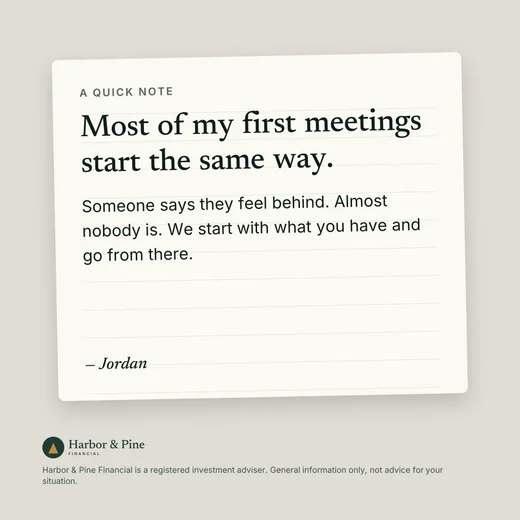
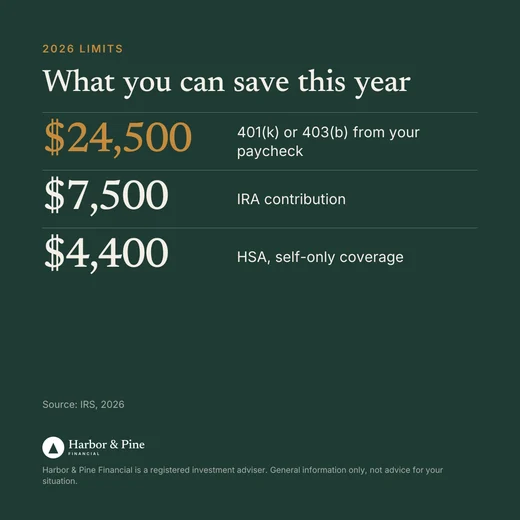

Open now. Watt drafts a week of posts, emails and graphics in your voice, with no client data needed.
Start your 7-day free trialOne Thing to Try This Week
The thread running through all three stories is the same. Being findable and being differentiated are the same job, and AI can't do the second one for you. So this week, get specific about what you'd want to be found for. Here's a way to pressure-test it.
Step 1. Have your niche and your core expertise topics in mind before you start. If you serve a specific group, business owners, physicians, recent widows, or pre-retirees in one industry, name it plainly.
Step 2. Open Claude or Cowork and paste this.
I'm a financial advisor and I want to publish content that makes me findable by AI search tools by answering what my ideal clients are actually asking. Help me get specific.
MY NICHE: [who you serve]
MY CORE EXPERTISE: [3 to 5 topics I know deeply]
Do this:
1. List 15 specific, real questions someone in my niche is likely typing into Google or asking an AI assistant, the kind with real intent behind them, not generic ones.
2. Flag the 5 where I could give a genuinely useful answer that most generic advisor content misses.
3. For the single best one, outline a clear article I could publish this week, with a working headline, the key points to cover, and the one angle that would make it more useful than what is already out there.
COMPLIANCE GUARDRAILS
- Frame everything as education, not specific investment advice.
- Do not include any client names or private client details.
- Do not guarantee any particular ranking, traffic, or results.
Step 3. Take the article it outlines and publish one version this week, somewhere a bot can read it, your website or a public article page, not just a platform that blocks crawlers. One clear, findable piece beats ten generic ones.

Sam is the creator of Amplify for Advisors and Watt, the Amplify for Advisors Agent. A former RIA owner whose work has been featured in Forbes, NerdWallet, Nasdaq, and more, he teaches financial advisors to use AI in their own voice while staying compliant.