This week someone finally graded chatbots on the part of financial advice nobody puts on their website, which is asking enough questions before giving an answer.
The results were a nice reminder that the classic advisor answer, "it depends," turns out to be the most accurate one after all. Vanguard added fresh evidence that AI is sending people your way, and ChatGPT opened a new front door for businesses that you'll want to look at carefully before walking through.
Three stories from this week that matter for your practice.
A New Benchmark Found Chatbots Skip the Questions Advisors Always Ask.
On Friday, Vals AI and NextLadder Ventures released a benchmark that tested 28 AI models in 256 simulated financial counseling conversations, built with practicing counselors and advised by the Financial Health Network. A second AI played the client and only shared facts like income, debts and family size when asked.
Even the models that gathered the most information left about a fifth of the key facts undiscussed, and advice rested on a wrong assumption about the client in about 1 in 10 conversations. In crisis scenarios, the top model left out a point most top chatbots made in about 1 in 10 conversations, while free ChatGPT did so in about 5 in 10.
Why you should care: The failures look a lot like what happens when nobody asks a follow-up question. One example in the release was a model assuming a client was a single adult without asking about children, which can mean missing thousands of dollars in credits.
That's a real strength of a good advisor, and it's worth saying out loud to clients and prospects. The answer is only as good as the questions that came before it, and asking them is a big part of what people pay you for.
Vanguard Says AI Is Sending Investors Toward Advisors, Not Away.
On Monday, Vanguard published new research called The AI Advice Frontier. About a third of the Vanguard investors it surveyed use AI for financial guidance, but only 19% are confident the information they get from it is accurate.
AI isn't eating into the value of advice either. Just 2% of advised clients and 3% of self-directed investors said AI has reduced the value of working with a human advisor, and more than 80% aren't comfortable with AI taking action on their behalf. Andy Reed, Vanguard's head of behavioral economics research, put it this way, "Many investors are comfortable taking AI for a test drive, but few are letting it self-drive."
Why you should care: Vanguard's research found that using AI shows people how complex their finances really are, which raises their appreciation for advisors. Your clients and prospects are testing the tools, and many of them are coming away with better questions for you.
That makes AI a friendly topic to bring up in reviews. Asking a client what they've been asking ChatGPT lately is a low-pressure way to find out what's on their mind, and it shows you're paying attention to how they actually make decisions.
Source: Why AI is sending investors to advisors (Vanguard)
ChatGPT Now Lets Businesses Set Up Verified Profiles.
On Tuesday, TechCrunch reported that OpenAI launched a Business Hub in beta, where eligible companies can verify and update information about their products and services. TechCrunch compared it to Google Business Profiles.
Businesses also get limited insights, like profile views, mentions and website clicks, and eligible companies can launch a business agent that answers questions about them inside ChatGPT. OpenAI hasn't shared who's eligible, how verification works for each type of business or whether it costs anything.
Why you should care: If prospects are asking ChatGPT who to hire, a verified profile could eventually matter as much as your Google listing does today. It's worth watching, and worth checking whether your firm can claim one once eligibility is clearer.
The business agent deserves more caution. An agent answering prospects' questions in your firm's name is a communication your compliance team will want to review, so treat it the way you'd treat a chatbot on your own website and check with them before you turn one on.
Meet Watt, the marketing agent for financial advisors.
Monthly newsletters, website articles, social posts and graphics, all in your brand and your voice.
Paste your website and Watt learns your brand.

- Your colors
- AaAaYour fonts
- Your logo
- Your voice
Your week of posts, drafted for you.





Your monthly newsletter, written for you.
- Sounds like you
- Links to your website articles
- Your disclosure added
More than 50 client handouts, in your brand.
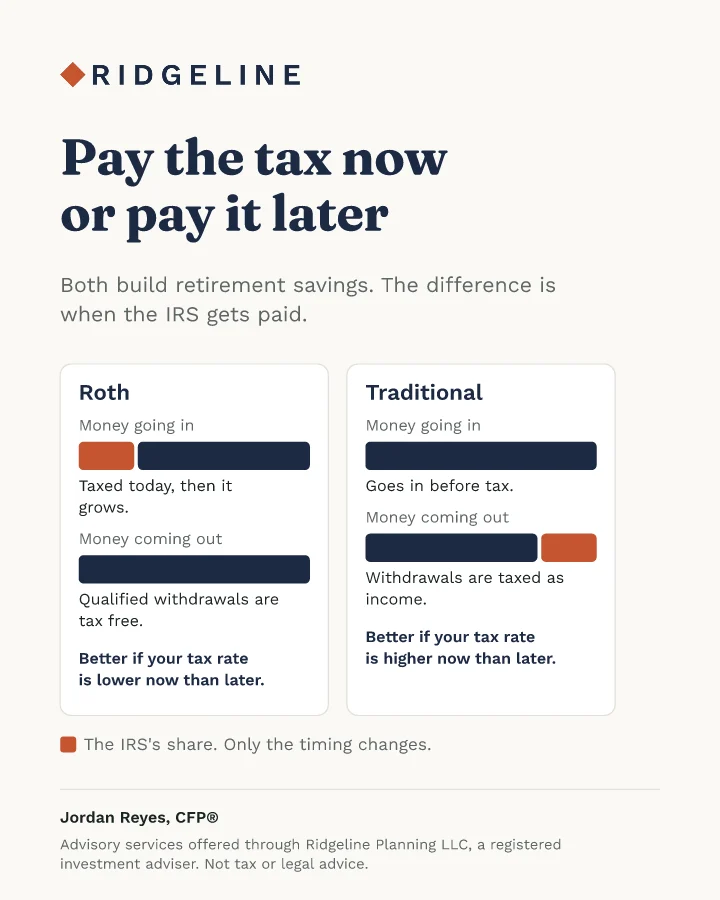
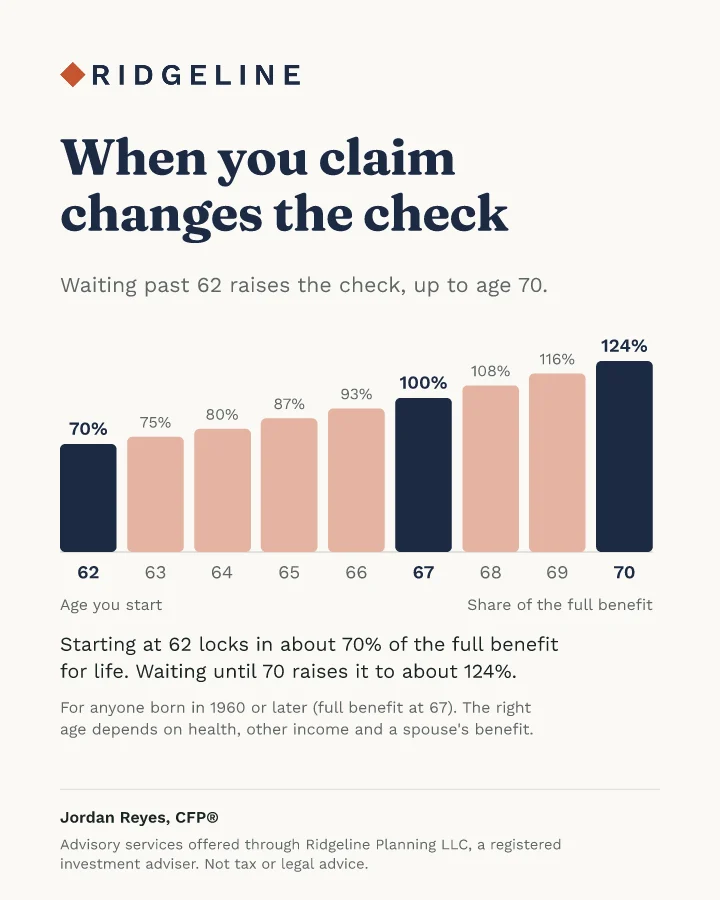
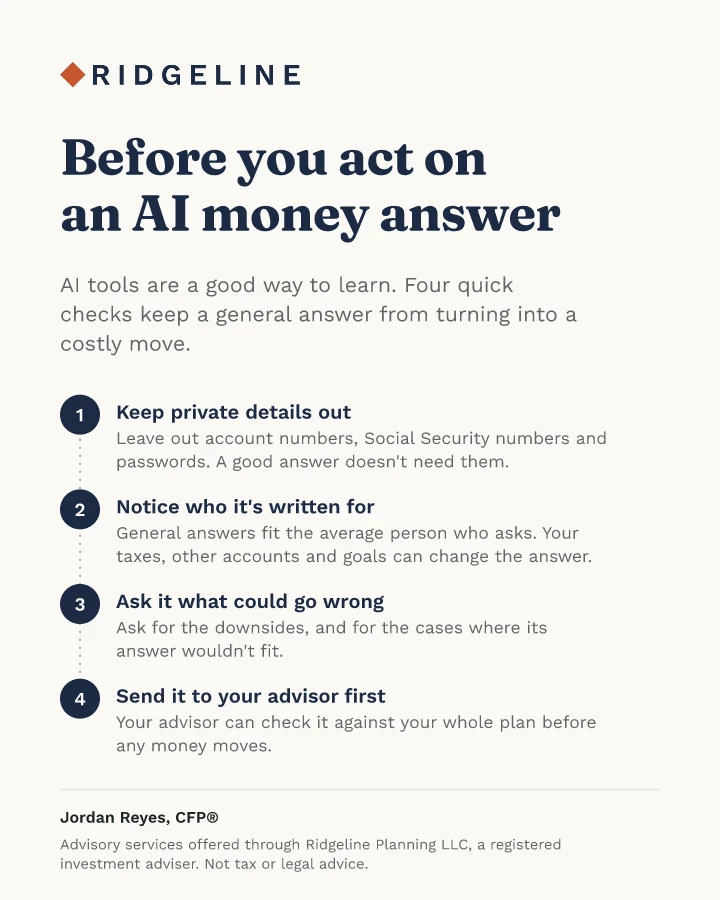
Nothing goes out until you approve it.
- infPosts to LinkedIn, Facebook, Instagram and X on timeFacebook and Instagram business accounts
 Newsletter ready to sendDrafted in your Mailchimp or Kit
- A copy for your records
About 10 minutes a week
About ten minutes a week. Nothing goes out until you approve it.
Start your 7-day free trialONE THING TO TRY THIS WEEK
The benchmark showed that the weakest part of AI advice is the questions it doesn't ask. This week, turn that around and set up a checker that lists every fact a client's question depends on, so you know what to ask before you answer an email or walk into a meeting.
Step 1. In Claude, create a Project called "Fact check before I answer" (in ChatGPT, a custom GPT works the same way). Open its instructions and paste this.
You help me, a financial advisor, prepare to answer a client's question well. When I paste a question from a client email, a meeting note or something a client asked an AI tool, with no names or account numbers, do three things. First, list every fact the right answer depends on, grouped as household, income and cash flow, taxes, accounts and benefits, debts, timing and goals, and mark which facts the question already tells us. Second, write the follow-up questions I should ask to fill in the missing facts, in plain, friendly language a client would be comfortable answering, starting with the ones most likely to change the answer. Third, list the assumptions someone would be tempted to make if they answered right away, and the deadlines, tax effects or referrals that are easy to miss for this kind of question. Don't answer the client's question itself, never guess at facts that weren't given and keep everything educational.
Step 2. Test it with a question a client asked you recently, and compare its list with what you actually asked. If it catches something you'd normally ask later, that's a question to move up next time.
Step 3. Use it before you reply to any money question that arrives by email or before a meeting that starts with one. It takes a minute and turns a quick answer into a better one.
The best answer usually starts with a better question.

Sam is the founder of Amplify for Advisors and Watt, the Amplify for Advisors Agent. A former RIA owner whose work has been featured in Forbes, NerdWallet, Nasdaq, and more, he teaches financial advisors to use AI in their own voice while staying compliant.