Social Media Post Ideas for Financial Advisors Who Serve Physicians
Physicians scroll social media between shifts, so a post has to earn its place in a few seconds. The posts below each take one money decision doctors face early in their careers and turn it into something they can act on this week.
The short answerDoctors respond to posts that answer a decision they face this year, like a new attending contract, loan forgiveness or disability insurance. Give one clear step, use official figures with their source, and leave the advice for the meeting.
Five posts for advisors who serve physicians
Post 1
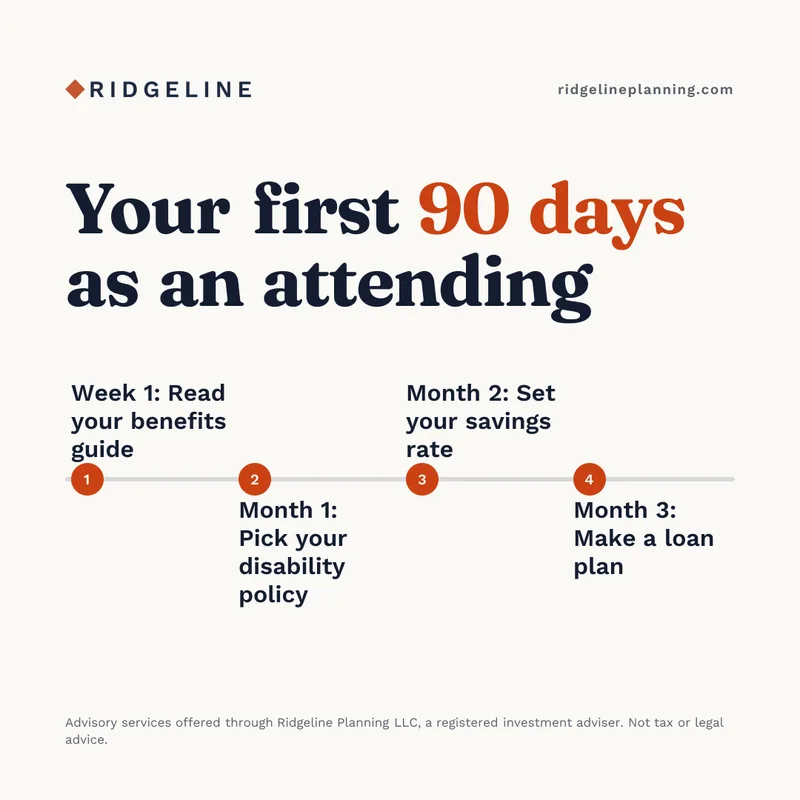
The first 90 days as an attending
The post
Your first 90 days as an attending set the tone for years.
Here's an order that keeps it simple.
Week 1. Read your benefits guide, start to finish.
Month 1. Pick a disability policy, and look for the words "own occupation."
Month 2. Choose a savings rate before the bigger paychecks start to feel normal.
Month 3. Decide on a plan for your loans, especially if you're working toward forgiveness.
Which of these is still on your list?
Why it works. New attendings face a pile of decisions at once. A sequence they can save and come back to gets shared with co-residents.
When to post it. May through August, when residents finish training.
Post 2
Pay off loans or invest first
The post
A belief I hear from a lot of new doctors is that every loan has to be gone before investing starts.
For many physicians, doing both at once can come out ahead. It depends on your interest rates, whether you get an employer match and whether you're working toward Public Service Loan Forgiveness.
Which one fits you is a good question to bring to a planner.
Why it works. It takes a belief doctors already hold and gives them a reason to rethink it, without telling any one person what to do.
When to post it. Any time, and again when federal loan rules change.
Get posts like these in your own brand
Type your website. In about a minute Watt writes 3 posts for your firm, with your colors, fonts and logo. Free, no sign-up.
Nothing posts without your approval.
Post 3
Own-occupation disability coverage
The post
Early in your career, your ability to practice is what your whole plan rests on, and the fine print on your disability policy decides how well it's protected.
An "own-occupation" definition generally pays if you can't work in your own specialty, even if you could work in another field. Other definitions may not.
Pull out your policy this week and look for that phrase. If you can't find it, ask your agent what yours says.
Why it works. It's specific to doctors, it's easy to check in five minutes, and it starts a conversation without a sales pitch.
When to post it. During open enrollment, and when residents sign their first contracts.
Post 4
Two plans, two limits
The post
Many hospital-employed physicians can use both a 403(b) and a 457(b), and each has its own limit. For 2026 that's $24,500 in each.
That can mean far more room to save than you'd guess from one plan alone.
A non-governmental 457(b) works differently from a 403(b), though, so read your plan's rules before you count on it.
Figures from the IRS 2026 contribution limits.
Why it works. A real figure with its source is easy to trust and easy to save. The caution line keeps it fair and balanced.
When to post it. January, when new limits apply, and during open enrollment.
Post 5
Public Service Loan Forgiveness
The post
Working at a nonprofit or public hospital?
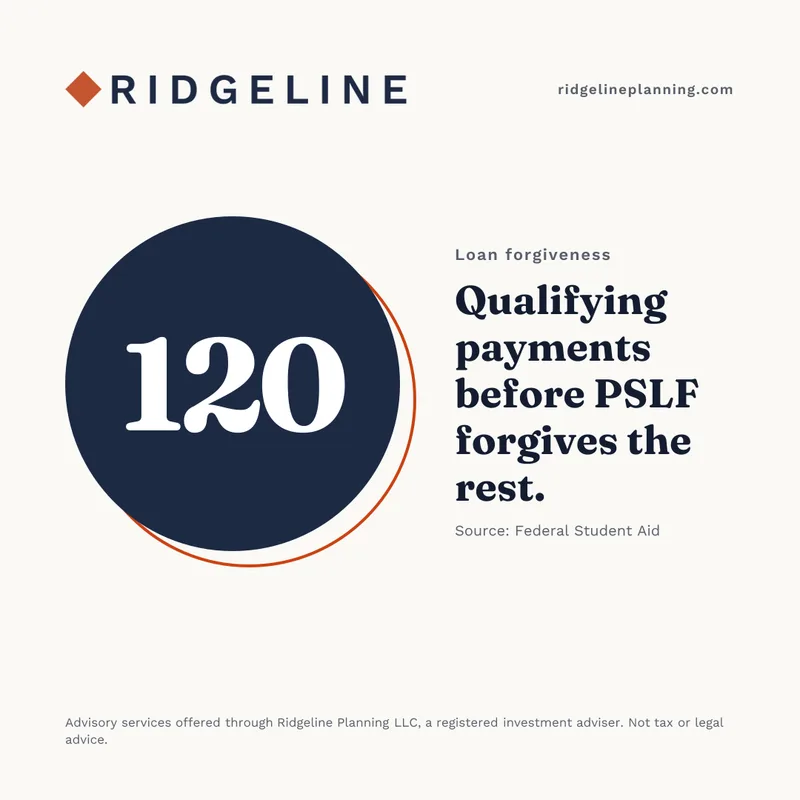
Public Service Loan Forgiveness forgives the rest of your federal Direct Loans after 120 qualifying monthly payments while you work full time for a qualifying employer. Payments made during residency can count.
Certify your employment every year so your count stays accurate.
Details at studentaid.gov.
Why it works. One big number stops the scroll, and the post answers a question many doctors are unsure about.
When to post it. Any time, and whenever forgiveness rules are in the news.
Posting on LinkedIn, Facebook and Instagram
The same square graphic and post work on all three.
LinkedIn shows posts with links to fewer people, so put any link in the first comment.
Links in Instagram captions can't be tapped. Say the link is in your profile.
On Facebook, ending with a question invites replies.
Keep these posts compliant
Use official figures only, and name the source in the post.
Say "many doctors" or "a lot of the physicians I work with", never "most doctors" or "every doctor".
Don't tell anyone which loan plan or policy to choose in a public post. Give the question and offer to talk.
Leave out client stories unless your compliance profile allows them with the required disclosures.
These are general ideas, not compliance approval. Your firm's review decides what goes out.
Get posts like these in your own brand
Type your website. In about a minute Watt writes 3 posts for your firm, with your colors, fonts and logo. Free, no sign-up.
Nothing posts without your approval.
Questions advisors ask
How often should advisors who serve physicians post on social media?
Two or three times a week is a pace a solo advisor can keep. Steady posting matters more than volume, and a post tied to a real deadline does more than a general tip.
Can I use these posts as they are?
Use them as a starting point. Change the wording to sound like you, check the figures for the year you post, and run them through your firm's compliance review before they go out.
What should I avoid in posts for doctors?
Promises about outcomes, predictions about markets or loan rules, rankings you can't back up, and anything that reads like advice for one person. Give the fact, the source and the question to ask.
The graphics on this page were made by Watt for Ridgeline Planning, a sample firm. Figures are for 2026 and come from the sources named in each post. Check them for the year you post.