Social Media Post Ideas for Financial Advisors Who Serve Pre-Retirees
People in their late 50s and early 60s are making big money decisions that are hard to undo. These posts each explain one of those decisions plainly, so they know what to ask.
The short answerPeople close to retirement respond to posts about the dates and decisions just ahead, like Medicare at 65, when to claim Social Security and how to turn savings into a paycheck. Give the rule, its source and one question to think about.
Five posts for advisors who serve pre-retirees
Post 1
Your Medicare window
The post
Turning 65 soon?
Your first chance to sign up for Medicare is a seven-month window. It starts three months before the month you turn 65 and ends three months after.
If you're still working with coverage through your job, the rules can be different, so check before you decide.
Details at Medicare.gov.
Why it works. It's a date-driven fact people need and often get wrong.
When to post it. Any time, and for anyone turning 64 or 65 this year.
Post 2
Milestone ages
The post
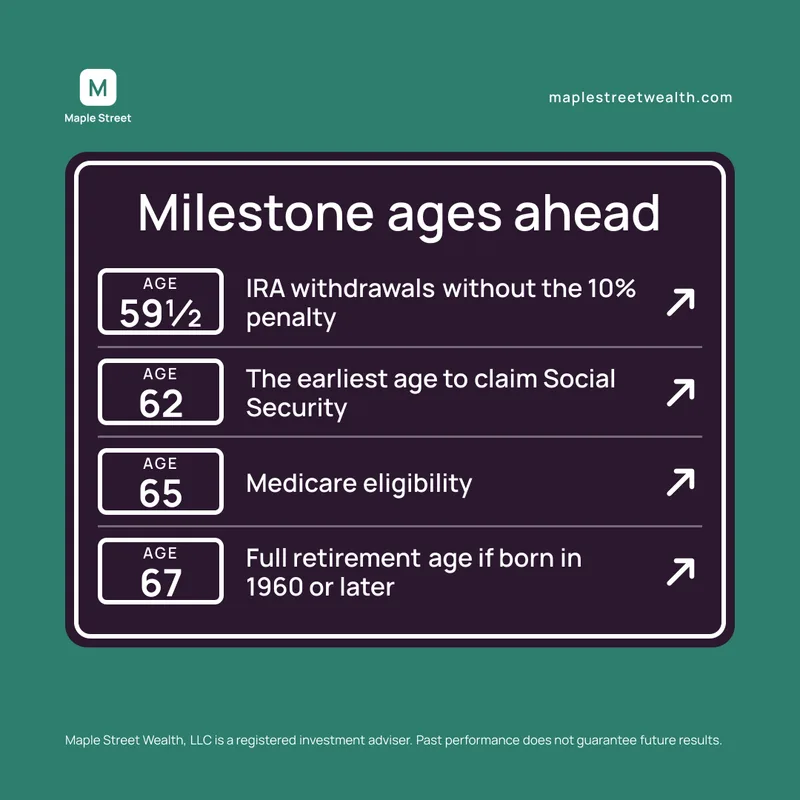
Four ages worth knowing as retirement gets closer.
At 59½ you can take money from an IRA without the 10% early withdrawal penalty.
At 62 you can first claim Social Security.
At 65 you become eligible for Medicare.
At 67 you reach full retirement age for Social Security if you were born in 1960 or later.
Which one is next for you?
Why it works. A simple timeline gets saved and shared with spouses.
When to post it. Any time.
Get posts like these in your own brand
Type your website. In about a minute Watt writes 3 posts for your firm, with your colors, fonts and logo. Free, no sign-up.
Nothing posts without your approval.
Post 3
Turning savings into a paycheck
The post
Saving for retirement and living on your savings are two different jobs.
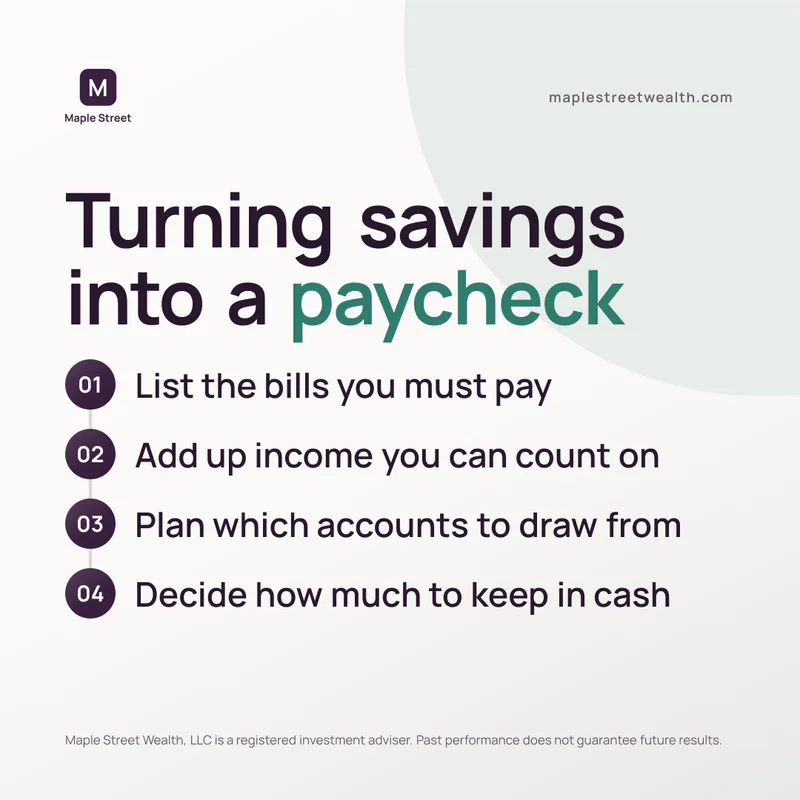
Four steps to start the second one.
List the bills you must pay each month.
Add up the income you can count on, like Social Security or a pension.
Plan which accounts to draw from, and in what order.
Decide how much to keep in cash.
The gap between the first two is what your savings need to cover.
Why it works. It turns a vague worry into a clear first step.
When to post it. Any time.
Post 4
Catch-up contributions
The post
If you're 50 or older, your 401(k) has extra room.
For 2026 you can put in up to $8,000 more than the regular $24,500 limit.
If retirement is ten or fifteen years away, those extra dollars have years to be invested.
Figures from the IRS 2026 contribution limits.
Why it works. One big number stops the scroll, and it's a real opportunity many people miss.
When to post it. January, and during year-end planning.
Post 5
When to retire
The post
"When can I retire?" is a question I hear a lot.
A better starting point is what you'll spend each year once you do. Once you know that, the date gets much easier to pick.
Have you added up what your retired life would cost?
Why it works. It reframes a question people ask a lot and invites comments.
When to post it. Any time.
Posting on LinkedIn, Facebook and Instagram
The same square graphic and post work on all three.
LinkedIn shows posts with links to fewer people, so put any link in the first comment.
Links in Instagram captions can't be tapped. Say the link is in your profile.
On Facebook, ending with a question invites replies.
Keep these posts compliant
Use official figures and dates only, and name the source.
Don't tell anyone when to claim Social Security or retire in a public post.
Avoid promises about how long savings will last.
Leave out client stories unless your compliance profile allows them with the required disclosures.
These are general ideas, not compliance approval. Your firm's review decides what goes out.
Get posts like these in your own brand
Type your website. In about a minute Watt writes 3 posts for your firm, with your colors, fonts and logo. Free, no sign-up.
Nothing posts without your approval.
Questions advisors ask
What do people close to retirement want to know?
When to claim Social Security, how Medicare works, and how to turn savings into income they can live on. Posts tied to a specific age or date tend to get saved.
Can I use these posts as they are?
Use them as a starting point. Change the wording to sound like you, check the figures for the year you post, and run them through your firm's compliance review before they go out.
How do I keep posts for pre-retirees compliant?
Use official figures and dates with their source, avoid predictions about markets or how long money will last, and keep personal advice for meetings.
The graphics on this page were made by Watt for Maple Street Wealth, a sample firm. Figures are for 2026 and come from the sources named in each post. Check them for the year you post.